Showing posts with label government. Show all posts

Saturday, April 23, 2022

What Happens When Reason is Replaced?

What happens when reason is replaced with rage?

At the end of the eighteenth century, both America and France had revolutions to change the status quo.  Both revolutions replaced a monarchy.  In the United States, we severed our union with King George III, of Great Britain. The French chose to redefine the monarchy of King Louis XVI.  Our revolt was spurred, in part, because of dissatisfaction with British taxation, without having a voice in Parliament.  The French were in the middle of failed economic policies by the monarchy, but more importantly, there were famines, droughts, inflation, and taxation of the poor, but not the privileged class.


The paths our countries took after the revolution reflect two radically different approaches.  Our revolutions took place at the last stages of the “Age of Enlightenment” or the “Age of Reason” where science became a central idea among the intellectual community and theorists in Philosophy and Political Science began to write on how governments should serve the people, and how all ideas should be questioned and resolved towards a common good.  Our political leaders, schooled in these ideals applied themselves to creating a government to serve the people, provide for general prosperity, and provide for a common defense.  But they knew a government unchecked would eventually grow to be a self-serving institution. To help prevent, or at least slow this process,  they ensured there were a series of rational checks and balances to the power of a single branch.


France, on the other hand, seemed to reject the very concepts of "Reason" we found so inviting.  As the revolution evolved, it moved from reason to madness.  Initially, the revolution sought to limit the authority of the monarchy (roughly similar to what the British had done with the Magna Carta), increase the power of the third estate (the middle class) limit the power of the clergy and the nobility.  But as time went on and discontent with the progress grew there came an insurgent movement by the Jacobins and the peasants against the landowners.  In the end, the revolution and its counter-revolution resulted in the execution of the King, Queen, a lot of nobility, and anyone the revolutionists in power thought deserved to die.  It was the Age of the Guillotine. From the ruin of the revolution, Napoleonian Bonaparte rose to create his first empire.

Why the difference.  Both started with the progressive philosophies of the day, why did one end with an outcome that led to successful self-governance, while the other replaced a King with an Emperor?

Perhaps it is what we see in our urban areas today.  We have the rich, the powerful, and those who depend on the rich and powerful for their survival.  We can speculate as to the cause of this, but are we developing a class of citizens incapable of reason and who seek only their own interests?  While those in power seek to remain in power by responding to the emotional demands of those who cannot see self-interest is, in the end, destructive?

Those who control the power of the state, and their allies who benefit from the largess of those in power, seek to keep the third estate powerless and in chaos so it cannot rise to challenge the power of the first and second.  What better way than to ensure there is sufficient rage amongst those who refuse to see a different path?  But what happens, when there are shortages as there were in France.  When shelves are bare, energy expensive, and working no longer offers hope of a better life.  Will the elite suggest when there is no bread, we should eat cake?

Wednesday, March 27, 2019

Privilege, White and Otherwise


A recent fad among the social justice warriors is to accuse anyone who disagrees with their demands of having led a privileged life where because of their skin color, gender, or financial status they were allowed access to education or opportunities the poor African-Americans/Latinos/LGBTQ minorities and women weren’t.  This, much like the critical race theory, started as a social justice academic theory widely embraced by those seeking something to hang all the social failures on.

An interesting aspect of the recent “hate crime” scandal in Chicago is how little we hear of the privileges afforded a connected black actor.  Here we have an individual with connections back to the former Senator from Illinois and President.  An actor who claimed he was a victim of a hate crime in that den of MAGA politics – Chicago.  When the police investigated – their findings suggested he was the principal organizer of this farce.  He was dutifully charged, arrested and posted a bond to ensure his return to court.

We will never know beyond a reasonable doubt if he was guilty or was truly a victim because while this was playing out in the public arena his political connections were working behind the curtain to have the charges dismissed.  The fact all of the behind the scene players shared a party allegiance makes this scenario all the more credible to the average outside observer.  The telling thing in this negotiation was the charges went away, but he lost his bond money.  If, in the opinion of the prosecutor, the charges were found to be unsupported by the facts why did she keep the bond money and suggest it would go into the coffers of Chicago?  It is almost as if she concluded the actor should pay a small price for wasting the time of the Chicago Police Department.

This is just the simplest of scandals but it reflects clearly why the average middle-class citizen is losing faith in the judicial system because of the obvious double standards of accountability.  When the ideal of equal justice under the law no longer exists, can our government long continue?

Don’t get me wrong, I think privilege exists.  It has always existed but as the term is used in today’s society it has been bastardized to such a point the average woke SJW who uses it as a club really doesn’t have a clue as to where and how actual privilege is determined and applied.

For example, isn’t it the privilege of wealth and connection that afforded those involved in the most recent academic admission scandal to gain access for their children to the colleges of their choice?  The irony is so many of those taking advantage of their privilege were more than happy to tell the rest how we must think and behave to be socially acceptable.

Saturday, March 9, 2019

Governing in the Age of Outrage


This week’s outrage seems to focus on two freshman Representatives in the House.  Individuals who’ve made it quite clear they believe their faith is superior to all others and another faith is to be vilified and eliminated, if possible, from our political system as a good first step to its total elimination from the world.  They are supported by a third media savvy Representative and backed in a kind of “kid gloves” approach by their party leaders who choose to condemn anti-tolerance, but not really THEIR anti-tolerance.

Of course, those who recognize the hate speech as hate speech are all over this, many going so far as to question why we are even allowing “their religion” and “their views” to be a part of “our government.”

I guess the real question is how far will identify politics go, or how long will it take before we achieve the ultimate end of a representative government able to work for a common good, rather than vilification of all the various groups who are a foundation of what was once a homogeneous nation?

I use the term "homogeneous" for that is what I was taught as a boy.  “E Pluribus Unum” is found on our coinage, and it was put there intentionally to remind us that we are “Out of many, one.”

It should be obvious to anyone who cares to actually look at the issue of identity politics – it is all about the gaining of power and position in society.  There is no real secondary reason.  It is justified by saying we need to seek all the social buzz words like “tolerance,” “equality,” or “justice” but at the end of the day the groups who make these claims have shown no real evidence they want to stop at recognition or equality, they all want to dominate and destroy their opponents, just as the tycoons of the industrial age sought to dominate and destroy their rivals.  I think I can safely conclude this is a human standard, which would carry back to almost all human societies throughout written history.

As we embrace the new standards of identity politics and its major components of victimhood and intolerance it seems inevitable the two major parties, who’ve more or less guided this nation since the mid-1800s, will fracture and divide and perhaps become a multitude of parties with a need for coalition building – as is common in most parliamentary governments.  Unfortunately, most coalition building requires acceptance of mutual common ground, and in the age of Twitter© common respect and acceptance seems increasingly unlikely in the public forums.

Just my two cents.

Sunday, September 30, 2018

A Few Thoughts on Changes.


        A few days ago, I had a Facebook post on the fact prominent Democratic politicians were now advocating that white male Presidential appointees should not be afforded one of our inherent and foundational rights under the law.  The feminist #metoo movement has led them to abandon the idea the accused must be presumed innocent until it is proven beyond reasonable doubt they are guilty.  Their position is the accused should and must be presumed guilty until he can prove beyond reasonable doubt his innocence.  This is obviously a political strategy, but if it were to become a social reality it shifts the burden of proof from the state to the accused and carries almost unimaginable ramifications for the abuse of our legal system by a powerful state.  As we saw in the previous administration the use of the tools of government against its opponents has already become a reality.  How easy it would be to make that next step to a totally authoritarian regime where the accused must now prove themselves innocent beyond question.

        One of my friends offered an opinion on this post, which for me provided some interesting food for thought on things we could or should do to change the government.  I would like to spend some time in response to those proposals for I think they are worthy of a little more in-depth response than firing off a brief rebuttal.

        His first proposal was to change the term of appointment for judges to the Supreme Court from life to 12 to 15-years.  His reason was to allow a change in the court when the political parties changed who was in or out of power.  Although not specifically addressed in his suggestion I will make the leap that if we are to change the term of appointment for the SCOTUS, we would then make the appointments to the multiple Courts of Appeal  term-limited, for it makes little sense to allow longevity on the lower court, where the vast majority of opinions are really made, when a court charged with a responsibility to review and adjudicate appeals would be made up of term-limited justices who would be seeking favor from the party likely to be responsible for their reappointment when a term expired.  Of course, that could be remedied by only allowing an individual to serve one term, but looking at our pool of lawyers and judges do we really have that big a pool of impartial experts in the law to swap them all out every 12 to 15 years?  Maybe we do, but color me skeptical.  As we look at the quality of our political pool I don’t see a lot of brilliance in the herd.

        My concern with this proposal is a simple one, it forsakes the role of the court as a check to the abuse of power of the state.  We can debate the pros and cons of activists versus originalist judges and how the court has from time to time created legislation from the bench, but if we create a system where the Executive and Legislative branches have a regular and recurring role in renewing the appointment of the judges then we clearly establish those branches as dominating factors in running the courts for their political advantage, and eliminate the independence the founding fathers believed to be critical to a government by and for the people.  We are where we are today because politicians believe the courts should be an extension of their political platforms, this step will make that a reality.

        I don’t think it would take even a whole generation for us to see the judges becoming subservient to the politicians who appointed them and abandoning any appearance of independence from their masters.  Their dual roles in determining justice and protecting the individual will, in my opinion, quickly fall to the wayside as they lobby for the continuation of their appointments.  Of course, all this would be done behind closed doors and away from the public providing another reason for an already dubious public to lose faith in the fairness of our legal institution.  The only real benefit I see is with the way the Senate now fulfills its “advise and consent” role they would be so busy approving appointments they would have very little opportunity to screw anything else up.

        Our founding fathers, having suffered through the good and bad of the English legal and political systems recognized the potential for abuse by the state and were strong advocates for the individual.  Most were not in favor of a dominating central government as evidenced by our first attempt at establishing our independence with a confederation of states.  The failure of that experiment led us rather quickly to conclude there were certain things a central power was absolutely essential for; among them to ensure the states treated each other reasonably equally, there was a single standard for justice, interstate commerce could flow freely for the benefit of all, and we provided for a common defense of all our states.[1]  So, when it came time to actually establish that government the rights of the individual and a recognition for abuse of that consolidated power must have been among the primary considerations, and this is supported by the Federalist papers written to advocate and assure the common people this new government would not grow so strong as to enslave them and challenged by the Anti-Federalist who argued for the rights of the states and local governments as a way to protect the rights of the individual.[2]

        His next suggestion dealt with the nature of the republic and how we pass our laws.  He recommended we abandon the concept of a representative government and become a “full democracy, with a few safeguards, and have the people of the USA pass the laws by voting for them.”

        Let me begin my answer with a disclaimer, “full democracy with a few safeguards” seems to me to be an oxymoron.  Either we have full democracy or we don’t, if we have full democracy then any proposed safeguard could be abandoned with a simple majority vote or those safeguards would limit the rights of the majority in the democracy.  In a pure democracy, the rights of the minority really don’t matter all that much.  I’ll address that shortly, but that opinion aside then how would this work?

        How often do we see in the social media an on-going debate over whether we are a democracy or not?  Anytime someone gets pissed at a politician, government agency, or even a commercial enterprise they will complain about us living in a democracy.  Of course, they will be immediately condemned as an idiot by someone who points out, “no we live in a Republic.”  I tend to take a bemused view of these debates and hold they are akin to the philosophical discussion on the nature of angels, or how many angels can fit on the head of a pin?  We are a democracy from the standpoint we the people (usually about 55% of the eligible we) do elect people who will represent us, and as such we are a republic where we trust our representatives and all the bureaucrats they have surrounded themselves with will work to protect our interests.  There are those who argue they are really protecting the interests of the rich and powerful, and there are those who argue if we just gave them more of our individual wealth they would protect the poor and helpless.  I think the former is closer to reality than the later.  But in both cases, those positions fail to consider the human condition and inherent human qualities like compassion and greed.

            What would a full democracy, with a few safeguards look like?  For a nation of 328 (plus) million, growing at a rate of slightly less than 1% per year[3] it would seem an almost impossible challenge to have everyone vote on every law, but let’s assume through modern technology everyone has a smartphone, computer, or embedded chip in their brain, with an app that makes this doable.  What changes would we need to make?

        Well first off, we would need a constitutional convention to pretty much scrap the constitution as it is written.  The entirety of Article 2 is effectively worthless since the idea of a House and Senate vested with the power to borrow money, create laws, regulate commerce, raise an army, impose taxes, fund a post office and declare war, seems completely irrelevant or if not irrelevant, at least redundant.  They could be replaced by an army of bureaucrats who would write the regulations and laws while managing the citizen votes necessary to enact them.  In a true democracy, all that would be needed for each of these things would be a simple 1 vote majority.  I suppose one of the potential safeguards would be requiring something other than that (kind of like what the Senate used to have on Presidential appointments until the Obama administration when the distinguished Senator from Nevada, Harry Reid, found that inconvenient and had the majority in power at the time change it.)  The problem with this is a majority of people have voted for a change, just not enough.  I would think the outrage by those with the strongest advocacy would be similar to what we see today by those who hate President Trump and are outraged a majority of the urban elite voted for Hillary, but she lost because of that pesky electoral college thingy.     

        Next, the roles and powers of the President would have to change, for example since there is no Congress almost everything they do would have to be shifted to a bureaucracy controlled by the President.  Would anyone pick up the role of “advise and consent?” In a pure democracy that would fall to the citizens.  Gosh, it looks like we would have to spend time every day voting on stuff or we just declare him or her as an autonomous entity and let them do what they think is right.  Until the age of Trump that usually seemed to be okay with at least ½ the population with the understanding, the other side would get their turn soon enough.

        We would also have to rewrite Article 3 to limit the court's ability to overrule the people.  Their ability to protect the individual from the mob would have to be reconsidered, for in a pure democracy the decision of the many must be considered as compelling and could not be wrong until the many reconsider them and choose another decision.  From what little I know about the amending the California constitutional we see something akin to this with their proposition process, and the danger of too much power in the courts as the California supreme court gets to choose whether a change is constitutional or not.  Of course, in a pure democracy, this would probably not be an issue because the fifty or so states would be dissolved since any national democracy would be limited by subordinate governments which might not be as pure as the central system and this would present a nightmare on determining the rights and responsibilities of the individual.

        My biggest concern, comes from my limited experience looking at the laws our lawyer-politicians, their staffs, and the lawyer-bureaucrats write these days, is assuming the average person will have the ability to understand and vote with a reasonable degree to knowledge on the subject to ensure we don’t inadvertently declare nuclear war on Antarctica because some bureaucrat is upset with the penguins pouching on her herring supply.  Related to this is how we actually calculate the majority, and who gets to decide who does and doesn’t get to vote.  What happens if a significant minority decides to just not vote, how do we decide what the required majority value is?  Do we just tally up the votes of those interested enough to actually cast a ballot and call that a majority, what if 70% of the eligible voters decided to go on holiday instead of hitting the like button on their app?  I know the devil is in the details, but darn it – details are important.

        I said earlier I would talk about how the rights of a minority don’t matter too much in a pure democracy, let’s use as an example something based on the last Presidential election.  Suppose the bureaucrats were to write a law that said all farmers in the middle of the United States must sell all their grain to a certain conglomerate for a fixed price, and the price they would be paid is limited to their costs.  That conglomerate, in turn, must first provide their end products to the major metropolitan centers of Boston, New York, Baltimore/Washington DC, Chicago, Atlanta, Miami, Dallas, Fort Worth, Houston and Austin, Los Angeles, San Francisco, Portland, and Seattle.  Everyone in those metropolitan areas would receive that product for free, while anything left over could then be sold to the rest of the nation.  How would the majority of the population vote on this?  I’m just guessing the majority living within the urban centers would be all for it, the rest of the country not so much. Would the urban centers have enough votes to carry the election as they claim they did in 2016 and this law become the new law of the land?  I think history has shown us the activists would carry the day and the minority would have to pay the bill.

        Well, that’s my opinion.  Thanks, Jimmy for giving me something to think and write about.


[1] United States Constitution, Preamble.  We the People of the United States, in Order to form a more perfect Union, establish Justice, insure domestic Tranquility, provide for the common defence, promote the general Welfare, and secure the Blessings of Liberty to ourselves and our Posterity, do ordain and establish this Constitution for the United States of America.
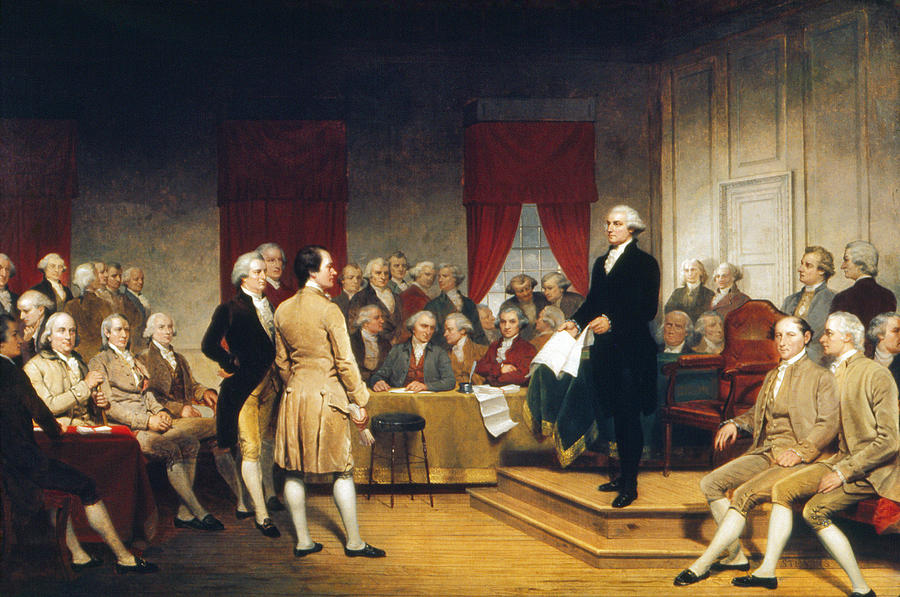
Thursday, January 4, 2018

Fall of the Republic


In the quiet of the morning, I am reading about the Roman Empire.  To understand the empire, you must start with the Republic that proceeded it. Pennsylvania State University has a good posting on the topic here. I was struck by the similarities with the demise of their Republic and our current state of affairs.

In talking about the power of the Roman Senate the article notes that by 30 BC most politicians had abandoned the Roman traditions and the Senate consequently lost its power.

“The fall of the senatorial power in Rome can be described by different specific events; for example, Tiberius Gracchus, elected tribune of the plebs in 133 BC, proposed a law known as Lex Sempronia Agraria, which in essence gave land to those who are poor and have fought in the army and had no land to return to. This is the first of many acts that started to define the different views and wants of the Optimates (the people of power, such as the senate) and the Populares (the roman people as a whole). Knowing that the senate would disagree with his proposal, he bypassed the senate and took his proposal directly to the Popular Assembly; this was considered a major insult to the senate. Tiberius Gracchus’s younger and more persistent brother, Gaius Gracchus, also broke many rules of tradition and was blatantly insulting towards the senate. Gracchus, however, focused much more on the enfranchisement of the Italian allies of Rome (this is seen as a move towards populares). C. Marius began to break tradition and law as well by taking men into his army who did not own any land previously. Marius and Sulla were the first two political figures in Rome who used considerable military force to get what they wanted, and this trend continued all through the fall of the Roman Republic and into the Roman Empire.”[1]

Beginning with President Obama and certainly accelerating with President Trump don’t we see the same thing happening?  Each, in his own way, has chosen to bypass the historical checks and balances of our government, while invoking the will of the people.  There are only two real differences I see in their approach. 

First, and foremost, President Obama has the adoration and support of a friendly press who would turn a blind eye to the dangers of his actions.  This was either purposeful because they believed in the political choices, or through neglect, as they chose not to investigate the true motives for those actions.  The same cannot be said for the current President. 

Starting from the day the American people made their choice the vast majority of the press has been openly hostile and heavy-handed in their reporting.  Unfortunately, their bias has been so obvious to all but the most anti-Trump opposition they have lost credibility in even the most legitimate of issues. 
The second is one of style, rather than substance.  President Obama, supported by a party that was in lockstep with him claimed his actions were to help the poor, to make a government bigger and stronger so the poor would not have to worry about healthcare, savings, or survival, and to bring equality to all.  He did this through vilification of capitalism and obvious preferences in religion and race.  None of these positions or ideas were original to him but were longstanding approaches of the intellectual urban and academic elite.

President Trump plays to a different audience.  President Trump’s strongest supporters are the people President Nixon referred to as “the silent majority.”  The middle class rural and suburban Americans the elites would dismiss in their quest for power.  The people Hillary Clinton labeled as “deplorable” because they do not share the same fluid values as those who rule and make up the upper echelons of government, industry, and wealth in America.

Of course, with the release of the new book “Fire and Fury” our current Caesar should be asking “et tu Bannon?”

Sunday, February 5, 2017

Let's Just Review the Bidding.


As a white man with a Master’s Degree in Organizational Behavior, I’ve served the nation as an Air Force officer and civilian for almost 40 years.  Along the way I’ve come to believe capitalism is the most successful economic system, smaller government is better than bigger government, unless specifically assigned to the Federal government most decisions should be left to state and local authorities, our future independence requires fiscal responsibility at all levels of government, we can no longer solve all the world’s problems by intervening militarily and economically when it is not critical to our security, and finally government policies cannot set the moral standard for a population rather they only reflect them. 
     I also believe, for example, welfare serves a purpose, but when it becomes a generational expectation it no longer meets that purpose.  Not everyone needs a college degree, and meaningful work has a reward beyond just the paycheck, providing the individual with a sense of self-worth and confidence to provide for their family.  Lastly, while we are a nation of immigrants we are a nation first because the immigrants came and adapted to the new expectations, not because they came to make it a copy of their homeland.  From what I gather from the enlightened broadcasters and pundits of ABCNNBCBS, outraged social media liberals, and the internet I am, by my mere being: a racist, bigot, homophobe, xenophobe, and in general just an asshole.  So, let’s talk about the past year or so, and what I think the future holds for us.
First we came to the Presidential election of 2016 where about everyone who lived comfortably in major metropolitan areas thought of themselves as academically gifted, good looking, witty, morally superior, and well above average, while everyone who lived everywhere else wasn’t.  Over the past twenty years or so the party of these urbane socialites had evolved to fit their gifted, good looking, witty, superior life styles and in the process, moved away from its original base of hardworking, average educated, union organized laborers as well as the poor of the inner cities.  Completing this evolution was the leadership of a President who encouraged the development of race conflict, and anarchist groups to further his party’s agenda.

On the opposite side of the political spectrum the Republican party was struggling to identify someone who could compete against the urbane superiority of the Democrats.  The elections of 2008 and 2012 had shown that traditional party leadership was no match when up against someone who could energize the black vote as President Obama did.  Although it is true they continued to pick up seats in the House and the Senate as the average citizen became disillusioned with the role of government, there was not a traditional candidate who stood out as significantly different than the rest.  For the most part all the Republican candidates looked a lot alike, with the only thing separating them the color of their ties or some socially vague claim of minority status.

True to its social agenda the Democrats nominated their next great leader, a woman to lead the nation, because we had not elected a woman and what could be better than that?  Unfortunately for them, the only woman they had sitting around waiting to be crowned carried a history of corruption, conflict of interest, and self-aggrandizement.  To actually have a primary season they found an aging white independent Senator who would claim Democratic party membership as an outside voice.  I can only imagine the shock of the Central Committee when Senator Sanders began to make a real contest out of it.  Looking back, that should have been a clue for the party faithful and their media arm.  Thankfully, the power brokers were able to stem the tide of grassroots activism and managed to get Ms. Clinton as their candidate.  They knew what America needed even if the average American didn’t really like her.

For the Republicans, a relative political neophyte emerged with a style and manner that laid waste to the traditional loyalties of the GOP.  True -- his style and approach was viewed as abhorrent by the professional politicians and social elites, but resonated with those the two parties had abandoned.   Running against 13 other candidates he took them down, one and two at a time.  The news media, doing their part, clamored all over themselves to give him almost unlimited air time, suffocating the more traditional messages of his opposition.  What was lost to almost all the political “experts” was the low cost (compared to everyone else) campaign that resonated with all the voters both parties had come to view as unimportant, the middle class of middle-America.  This was true of both parties initially, and I believe it was ultimately responsible for the resounding defeat of the new (Socialist) Democratic Party in November.

During the actual campaign, where America was presented with a choice of two extremely flawed individuals, the Democrats attempted to exploit the personal flaws of Mr. Trump while somehow holding that Ms. Clinton was the better choice.  The remarkable lack of self-awareness on the part of the party and its supporting news media (themselves viewed as untrustworthy by the people) meant that what they pointed out as flaws were, in fact, viewed as strengths by a significant majority of middle class middle-Americans.  The fact Ms. Clinton ran a campaign as if she were the Queen of England who would only occasionally sally forth to wave to “her people” strengthened Mr. Trump’s alignment with the men and women the Democratic Party had chosen to cast aside.

Then came November 6, 2016, a day that will live alongside December 7, 1941 in infamy, at least for the new (Socialist) Democratic Party.

What we have seen since that day has only served to reinforce a premise the new (Socialist) Democratic Party has abandoned the idea of a two-party system and would choose anarchy over the present administration.  We see this in almost every action of the party loyalists.  Whether it is the post-election temper tantrums, the casting of doubt on the validity of the election and legitimacy of the President, the maniacal ravings of celebrities and college professors in NYC and California, the violent riots against conservative speakers in UC Berkley or the challenges of the Executive Order on Immigration.  The idea of the two parties working together to form a more perfect union is long gone, perhaps never to return.


How long will this hysteria go on?  I suspect until the administration ends, or the nation becomes a group of individual states, like the breakup of the Soviet Union.  The new (Socialist) Democratic Party does not seem willing to rethink its basic principles and figure out how to regain its middle class, middle-Americans.  So violent rhetoric and action would seem all that is available to it as it fights to overthrow the regime in power.  It took the Roman Empire 400 years to collapse, but we live in an age of instant communication and America has a history of wanting everything right now, so I am guessing this period won’t last 400 years. 

Tuesday, October 11, 2016

Ghost Towns

Communities seem to have lives, just like the people who make them.  Some towns seem to rise up out of nowhere, flourish with a vibrancy and life that is both robust and exuberant, and then just as fast as they came into being they disappear.  The west is filled with these “ghost towns” that grew up from some industry, like mining, and when the industry died out so did the towns.

In reading the posts about Hyde Park I am struck by the similarities of the western mining towns to my hometown.  At its height it was filled with the rich and famous, growing from its farming roots, it became a summer playground for rich, then an international political center as the home, and summer residence, of the President. 
It saw Kings and Queens come for visits.  It had its own train stop on the tracks along the Hudson.  It was inevitable that would end at some point.  The President died, and his wife Eleanor retired to her cottage at Val-Kill, but because of her fame and influence, the town continued to thrive.


In the 1950s through probably 1990 the life of the town ebbed and flowed as farms flourished, and the county’s number one business, International Business Machines, grew to employ thousands of people in the towns surrounding its headquarters, plants, and research centers scattered around Dutchess and the adjacent counties.  The service industries like restaurants, drug stores, supermarkets, gas stations, and retail stores all flourished.  In the 1960s, the city center in Poughkeepsie was alive with shoppers going to the department stores and retail shops that made up the main street.

In the latter half of 60’s and early 70’s, we saw the advent of the shopping centers and malls, with most of that going to the lands south of Poughkeepsie, for that was where the big employer was located, and it made financial sense to be convenient to your customers.  It was then that Hyde Park seemed to begin its transition to the bedroom community it is today.  A place where people come to sleep, but work is somewhere else, perhaps somewhere far away like the New York City.

In the 90’s IBM began its fall from greatness.  Its failure to understand the radical shift in office automation, the changing landscape of computing, and the enormous management bureaucracy it had built, doomed its ability to respond quickly to the exploding advancement of circuit technology as foretold by Gordon Moore, and they gave way to the more agile companies of what is now known as Silicon Valley.

I left the town in the early 70s to join the Air Force.  So I wonder, what will change the Hyde Park of today to bring back the town it once was or is its continued decline to a shadow of glories past inevitable?

Sunday, July 10, 2016

I Disagree


Dilbert’s creator, Scott Adams, has a blog.  Unremarkably it is called Scott Adams' Blog, where he has been writing about this year’s political campaigns and his theories of persuasion.  In the piece “The FBI, Credibility, and Government,” he opines that Mr. James Comey, Director of the FBI, is a hero because he chose not to recommend prosecution of Ms. Clinton and throw a monkey wrench into the political system, perhaps tilting the democratic nomination to Mr. Sanders and the election to Mr. Trump.  He believes the elective process is necessary to provide credibility, which he says is the principle mission of the government.  Sorry, but I have to disagree.  Not so much about the need for credibility by the government, but on the potential impact an indictment would have to the elective process as a means of establishing the President-elect’s credibility.
This election, perhaps more so than all other elections, will result in less faith in the political credibility of our government based simply on the polarizing extremes of the two main parties.
But first I’d like to write a single paragraph to explain my difference with Mr. Adam about the principle need of any government.  While credibility is nice, credibility is the expectation the government will do what it says it will do.  For a government to continue it needs legitimacy.  Legitimacy, as the founding fathers point out, can only come from the belief of the people the government serves the purpose for which it was formed.  For us that legitimacy is codified in the Constitution.  For the government to maintain its legitimacy in the eyes of the majority it must “establish justice, insure domestic tranquility, provide for the common defense, promote the general welfare, and secure the blessings of liberty.” What our government has actively done since 2006 is undermine the citizen's belief that our government cares about justice, works to maintain a balance between personal rights and communal demands (to maintain domestic tranquility), and provide for an effective common defense.  The government, under this administration has seemed to work harder than previous administrations to undermine confidence in the political leadership. 
My personal belief is that the President has no vision, but reacts to the events of the day as if he were still a community organizer running to be the Senator from Illinois, but he is not the issue on the table.  We are talking about the upcoming election and whether or not as Mr. Adam’s believes it will provide credibility to the government.
If Ms. Clinton’s opponent were a visionary, a candidate with a sense of history, an individual who could make people believe in the future of the nation, and could serve as a unifying force then perhaps Mr. Adams would have a point.  But the presumptive opponent is Mr. Trump, a man best known for his entrepreneurial deal making; buildings, golf courses, and casinos that bear his name; a failed for-profit university scheme; and a reality game show that highlights the Trump enterprises while allowing him to sit in judgement of contestants.  His greatest appeal?  He is not one of THEM – a career politician who lives off the power inside the Washington DC beltway.  He says what he thinks, or he says what he wants (I’m not convinced thinking is always involved), unfiltered by the political spin doctors that sit on the shoulder (think of Jiminy Cricket) of career politicians like Ms. Clinton.
Allowing Ms. Clinton to run, unencumbered by a pending criminal trial, will not remove the stigma of the FBI investigation.  Her followers care little of the findings and I believe they would not be terribly deterred with a pending criminal finding.  The Obama administration would have to choose one of two courses of action.  To fast-track the trial, and perhaps based on the urgency, seek an emergency hearing by SCOTUS.  With the current SCOTUS composition that would seem the ideal scenario, but even if they did do that, how much confidence would the critics have that the political organization the DOJ has become would put their full effort beyond anything but a shame trial they would work to lose.  Then again, Ms. Clinton’s law team would have a vote, and I am guessing they would slow-roll the trial until well after the election, hoping once she was President-elect they could kill the indictment all together through a Presidential pardon.  In either scenario the people for, and the people against, Ms. Clinton are all pretty much decided.  Her success or failure in a general election will not improve this countries divisions or instill an improved belief in the legitimacy of the government. 
Those who support her will still argue for the President’s narratives: America is racist, radical Islamic terror is not evil, we are killing each other because we have guns, whites killing blacks are racists, but blacks killing police is too complex an issue to understand, and finally, we need more welfare and higher minimum wages to help those poor Americans and illegal immigrants who can’t find work because of the evil 1% who have all the wealth.
I believe those who support Mr. Trump will still rant and rave about the foolishness of those “Liberal Democrats.” They will fight against any gun legislation, they will seek to limit spending on welfare, they will unsuccessfully challenge most of the Democratic half-truth narratives and we will ultimately run out of money for social security.  But if Mr. Trump is elected he will follow the consolidation of power within the executive branch and use those offices in much the same was as President Obama and his cabinet secretaries have.  In fact, since the precedent has been set by the current administration he will be able to further open the envelop beyond what Mr. Obama has done, just as President Obama expanded on what President Bush had done during his terms. 
At the end of the day we will have just as much debt, fewer individual freedoms, and a more powerful central government that is despised and vilified by a significant segment of the nation.

Monday, April 25, 2016

Being of the Right Side of a Revolution

I noticed today a television show dramatizing the American Revolution is about to return.  It planted this thought. 

In a revolution there must be two sides.  Those in favor, and those opposed.  At the time of the revolution neither side knows which is the right side.  This was true in 1776, and it remains true today.  It is only when the issue is settled and the winners write the history do the following generations fall in line with the righteousness of the victors, at least until history repeats itself and there is a subsequent revolution with a potentially different outcome.

In the case of the American Revolution the revolutionaries sought to overthrow British rule characterized by what the Parliament and the King viewed as legitimate taxation to pay for the defense of the colonies, and what the revolutionaries viewed as an outrageous imposition without a voice in the government.

Today we have a government with three self-serving branches that are divided and increasingly ineffective.  We have at least three or four insurgent groups all opposed to this government for different reasons.  Of course this allows the central government to divide them and maintain their authority.  Then we have those who defend the government just as those who prospered under British rule defended the status quo in 1776.

I wonder, is there a right side to be on?

Tuesday, February 2, 2016

At the Great Divide


    For the past hundred or so years this country has been cultivating a political elite that is far different from the politicians that preceded them. At the federal level we have politicians that have spent their entire adult life spending other people’s money. To them the exercise of power, and the gain from influence, far outweighs whatever desire to serve may have originally spurred them into the public office.

    For example, take Harry Reid, D-NV, who comes from Spotlight, Nevada and has held political office since he graduated from Law School.  He has served in the Congress since 1983 (33 years, which is not even close to the longest serving members).  To borrow a line from Garret Morris and SNL, as a life time public servant public service has been very, very good to Harry.  He has managed to acquire between $3-10 million dollars through shrew investments in companies he would write legislation for or against, or land deals of questionable legitimacy.  When in charge of the Senate he stood as a rock to block any and all legislation that was not liked by the President.

    It appears the members of the Democratic party love to govern and once an individual joins the club they will stay for as long as possible. [i]  An interesting note about this list of career politicians is Senator Strom Thurman, who up until the Civil Rights Act of 1964 was a staunch Democrat, so we come all the way down to 17th position before we see a Republican as a life member of the club.

    Now to be fair, the Democratic party has for most of our history controlled the Congress, and the opposing parties (e.g Whigs and Republicans) have always had to challenge the popularity and power of that group.

    So now we come to this next election; where once again we will pit one party’s candidate against the other. I don’t believe the question the average voter should be asking is, “who’ll make a good President” but rather, “do I want to continue with a dysfunctional and self-serving government?” For the only way to change the government is to change those who control it for the long term.

    Unfortunately, this won’t happen because as much as Bernie Sanders would like to deny it we all make choices based on our self-interest, or greed.  There is always that fundamental question, what is in it for me? For the average individual they will vote as they have always voted.  If their “guy” is in the seat as their representative or senator they will feel good about it and they will vote to keep him or her in the seat, because their seniority will bring more federal dollars back to the district or state.  If they don’t like the incumbent they may or may not bother to vote, giving the incumbent a clear advantage.

    On the other hand, voting for the President, especially at the end of a term-limited regime, comes down to a basic choice – Do I like what the last guy did and want to continue, or do I want to change?  This next election will be interesting for the Democrats because it seems unlikely that either Mr. Sanders or Ms. Clinton will spur the minority vote to the degree Mr. Obama was able to. So we come to the quadrennial Great Divide, what direction do we want our nation nation, and how will we move forward? 

    Finally, one last thought on an issue for both the Democrats and the Republicans.  How much longer can this government exist spending money we just print for whatever pet project the party zealots love before the fundamental faith in the government to pay its debts disappears?  This faith in government is the basis for our currency, and once that evaporates our currency will no longer be the basis of world trade.


[i] https://en.wikipedia.org/wiki/List_of_members_of_the_United_States_Congress_by_longevity_of_service

Sunday, September 20, 2015

We Hold These Truths

     In the hot summer of 1776 men from the 13 colonies came together to determine a course of action for this nation.  They were not of one mind, but all carried some grievance with the motherland, her sovereign and his government. After considerable debate, discussion, argument, and more than a few pints of ale they reached agreement on that course.  It was a decision that would turn the world upon its head.
    Thomas Jefferson wrote the draft, but John Adams and Benjamin Franklin made significant edits.  The oft repeated and perhaps the most important sentences of the document are found in the second paragraph.
“We hold these truths to be self-evident, that all men are created equal, that they are endowed by their Creator with certain unalienable Rights, that among these are Life, Liberty and the pursuit of Happiness.--That to secure these rights, Governments are instituted among Men, deriving their just powers from the consent of the governed, --That whenever any Form of Government becomes destructive of these ends, it is the Right of the People to alter or to abolish it, and to institute new Government, laying its foundation on such principles and organizing its powers in such form, as to them shall seem most likely to effect their Safety and Happiness.”
    There are hundreds of histories, biographies and pieces of fiction written about that first Continental Congress; I will not presume to equal any of these published works either in research or writing.  But from my humble perspective I would like to reflect on the shift in our society that calls into question the fundamental basis for our government and ask a few simple questions.
    Today there seems to be a focus on the equality of man, as if this should be universally accepted.  Clearly the author of the declaration, himself a slave owner, used the terms with specific purpose.  We seem to forget its use was attacking the divine right of kings held as a sacred right by the King of England.  It came into vogue during the Protestant Reformation when the English monarch sought to resist the authority of the Catholic Church.
Jefferson and the Congress put forth the then radical idea that all men had certain rights that were not bestowed by a king or the government, and these rights could therefore not be taken away by government, but should and must be safeguarded if a government was to serve the people.  It established, perhaps for the first time, that government’s purpose was to serve the citizens, not the other way around.  This paragraph served as the preamble to the list of grievances the Congress would lay out in its declaration.
    Since then we’ve experienced a civil war as part of the nation attempted to dissolve the government to meet their political desires, and the other part resisted that effort with force.  The government has grown from a small organization where the majority of the effort was defense, to one that is increasingly involved in all aspects of our individual lives.  From telling us what the weather will be, to ensuring our toothpaste really whitens and brightens.  We spend billions and billions on new weapons -- because we can, and we celebrate politicians who promise to spend more of our money because they can.  We hold no one in government leadership personally accountable for scandal, but condemn those who would seek change.
    Here we are some 239 years later and the questions looms large for much of the population.  Does the increasing centralized government continue to serve to secure the rights of the individual?  As religious and civil intolerance increases does this form of republican representation still secure the blessing of liberty and provide for the inalienable rights recognized by our founders?  When political gain or loss is the primary consideration in most discussions is there hope for understanding and compassion?

Monday, June 29, 2015

Independence Day


As the parades march down the roads of towns and villages across the county, as we prepare cookouts, and then wander down to our parks for the fireworks it is easy to get caught up in the festivities, our families, and our communities.  We may sing some songs, we will drink some beer, and we will wave some flags, but will we spend any time considering how we became a nation and the courage the founding fathers showed?

We get all caught up in the politics of today with distinctions between liberal, progressive and conservative.  I am not sure the meanings we use today would match the definitions used in the past, but I think one thing is unmistakable.  The men who joined together to alter the path of empire, and the individuals in the country who joined with them were bound by a vision of the future we can only envy today.  They were progressive beyond anything we are willing to accept in their willingness to challenge the norm.  They were liberal in a way we cannot conceive where the ideas a new way were debated.  Where tolerance for opposing ideas was shown in every debate and everything was challenged and minds changed in debate as we faced a common hardship.  
 The one thing they were not was conservative in their views of government, but they bent to accommodate those who were, recognizing that change is only institutionalized if the majority agrees.  The religious differences were as strong then as today, but they recognized that to survive and prosper civil government and the church must be separate.

Today those have issues with the churches seek to use the government as a bludgeon against those institutions.

So what do we celebrate this Independence Day?  Is it a time to reflect on our commonality, or demand we recognize our differences?  If we focus on the latter, then I am afraid the number of future Independence Day celebrations will be limited.

Saturday, February 21, 2015

Life and Times

-->
These are interesting times, but then I suspect all people say that at some point in their life.  But as I watch from afar it seems to me that a town like Hyde Park is reflective of the lives of those who make up that town.

There are the young with their energy, zest and supreme confidence that they know more than the older generations.  They want so much from the town yet can’t understand why it is the way it is.  For the kids in High School seeking escape, or the recently returned looking for work, where is the nightlife, the social scene, and the place to be?

The middle-aged 30 and 40 something parents struggling to make ends meet, raising children, wanting more, but not wanting to see more of their income demanded from the town.  They see the decay, decry the ineptitude, and condemn the old for their resistance to change.  This group controls the future, but do they have the time or desire to do so?

Then we come to the elderly, they have seen it all and want to be done with the mess.  Let someone else worry about things, I have what I have and want to be left alone.  They remember the shining town of the past, the “remember when” or the “we had it great” times.

Clearly these stereotypes do not represent all.  There are vibrant members of all groups, people committed to change, people with desires for a better common good, and people wishing for a different future. 

The strength of a town is also drawn from its economic health, just as a family is.  If the family struggles to make end meet, is always on the verge of financial ruin, or uncertain that the future offers hope, they close in, they shrink away from the future, unless they have something greater to believe in.  I’ve seen men and woman who despite illness, poverty, or tragedy rise up to show the best of the human spirit.  Why is that? 

As a society we have voiced our concern for those living on the verge of financial collapse.  We’ve elected people who provide our money, or borrow more, to help those people to feel less threatened by the lack of work, or the cost of living.   Those elected officials will spend those funds on helping the people and helping the town but at the end of the day will it be sustainable.  When all the jobs dry up, when all the banks are drained, when all the rich are gone what will be left?

What keeps a town vibrant and rich?  Is it the largess of the multitude of governments and their programs, or is it the industry of the people?  History seems to suggest it is the latter.  In the last half of the 20th century we saw the garment mills that lined our east coast from Maine to Carolina close and move away.  Were those closures caused solely by the greed of the owners, or by the economic realities of competition?  Each of us will have an opinion, but at the end of the day the reality is something changed, or perhaps it is a natural evolution.  Regardless the causes, in each case when the work leaves - the towns become hollow reminders of a time past.

Just as with the human spirit, some pick themselves up and find a new future, others seem trapped in the past.  For those trapped in the past, it seems no matter what they do each new project is doomed for failure.  Cities seem especially ripe for this problem.  If there is not manufacturing industry, nothing to create the wealth upon which service industries and governments draw their revenue than they will struggle to face each day.

From afar this seems to be the basic issue for my hometown.  How does it encourage an industry to start?   Something that will turn raw materials into products to build jobs that offers a future, a career, and a potential for growth?  Economists talk of America becoming a service nation, where we deal with ideas, and advanced technology that will set mankind free.  Are we all prepared to live in a state where the individuals’ purpose is defined solely by the technology around us?

If we are, I wonder what becomes of the town?
Related Posts Plugin for WordPress, Blogger...