Showing posts with label environment. Show all posts

Sunday, March 3, 2019

Living in the Real World


Perhaps one of the funniest things I watch these days is the variety of Twitter storms that flash up and are feed by people who’ve come to believe their opinions are totally insightful.  Of course, I approach these festivals of insight with a bias; developed from years of listening to self-important people explain to me all that is wrong with the world, and how if we just do what they suggest it will be great.
For example, as an impressionable young man growing up in the hometown of Franklin Delano Roosevelt I was persuaded by the charism of JFK, and then the social conscience of LBJ as he proposed we greatly expand the welfare state to help those struggling with poverty and no medical insurance.  That plan was going to create a “Great Society” where poverty would be a thing of the past.  Although I didn’t pay too much attention to the details I was sure the creation of Medicare would dramatically improve the health of the nation.  It was only years later that I began to wonder who was paying the bills for it?
Then the self-important created federal enterprises to encourage mortgage companies to write more loans so more poor people could buy houses.  Fannie Mae and Freddy Mac would buy the mortgages from the banks, in theory freeing up bank money to write more loans.  Of course, with the assurance of the Federal Government to back the loans the bankers assumed increasingly less risk and wrote increasingly more risky loans.  Then, in 2008, we had a day of reckoning and all that risk came crashing down.  How many people lost their homes because they had paid far too much for a house, based on an assumption that if they lived in it a couple of years they could turn around and sell it for far more than they paid for it?  It was almost as if we just knew we couldn’t be as foolish and greedy as those poor saps in 1929.
Now we are told the world will end in 12-years, or so, if we don’t get rid of everything that uses fossil fuel.  Again, it seems eerily like the warnings issued a few dozen years ago that unless we immediately got rid of nuclear power we would suffer catastrophic meltdowns what would burn through the earth’s core.
The issue I have with these self-important people making these catastrophic predictions is they seem totally unwilling to lead by example.  It is almost like they are our fathers.  “Do as I say, not as I do!”  Those who seem to have the loudest voices regarding the end of the world also seem to be the ones flying on their own jets, or living in their own multimillion-dollar homes.
Recently, the freshman Representative from New York’s 14th District proposed a radical new approach to saving the world, one that by her reckoning will end in 12 years, where aircraft would be abandoned for highspeed trains and cars powered by hydrocarbon fuels would go the way of the Edsel.  When the NY Post observed she routinely flies from DC back to NYC she posted.  Living in the world as it is isn’t an argument against working towards a better future.  Last time I checked there was a train that ran from NYC to DC and back. 
Apparently, socialists don’t like to be called out for their inconsistencies’.  As one commenter to her tweet noted, “I’ll start listening to your advice when you do.”

Tuesday, February 12, 2019

It's the Truth


“I want the truth!”  “The Truth?  You can’t handle the truth!”  An exchange between LTJG Daniel Kaffee (USN) and Col Nathan Jessup (USMC) in the movie A Few Good Men.

As I’ve grown older the world has changed from “black and white” to “Living Color” to “50 Shades of Gray.”  It is a place where everyone once knew what was “right and wrong” is now “you have your truth and I have mine.”  I find it interesting in today’s world there are still people who believe they are standing on the moral high ground as they condemn their opposition as (insert your preferred demeaning adjectives here).

As I’ve noted in previous postings, we (the adults) of this American society have shifted from a heated but generally respectful debate of issues (social, economic, or otherwise) to simple personal attacks on those with opposing ideas.  We live in a world where most people now communicate across the social media by finding a glossy picture that praises or vilifies an idea they find attractive or outrageous, but when challenged they can’t really waste their time explaining why they feel as they do, they just do (or worse someone they like said they should).  It’s their truth and they are sticking to it.

As I write about the issues I find relevant – I find people of my generation generally understand the context of my statements and will either agree or ignore without comment.  (I sometimes regret the fact people who may disagree are unwilling to stand up and question me in public, but that is not something I control.)

Then there are those who focus on a single statement and seem to ignore the broader context.  Perhaps, it is my poor writing and an inability to articulate and define the central theme, or maybe it is easier for some to focus on a single tree when looking at a forest.  But, I ramble on.

Today, the issue before us is really one of government control, or rather how much government is enough and how much is too much. 

The members of the new People’s Democratic National Committee have rolled out a vision for America in their plan for a “Green New Deal” where they propose a government-run universal health care, elimination of all vehicles that use carbon fuel propulsion systems, an entirely new mass transportation infrastructure, a universal base salary, and essentially government control of all aspects of our social and economic lives.

The flash debate between the left and right is whether or not some words in the published draft are actually in the current draft or whether or not they really mean what they said before people questioned them on some of the stupid stuff they included. 

Just so there is no mistake let me be clear in my view.  I don’t believe this Green New Deal is any better than the last Green Deal the DNC rolled out.  And at the sake of offending those of my home town, I am not sure if the President’s intent of original New Deal was to actually help America recover sooner from the depression or just increase his power as President?

At its core, the New Green Deal is about expanding government control over the decisions of the average citizen.  Those who support it will claim it’s about making lives better, protecting the environment and creating the brave new future the progressives always see “just around the corner.”  These would be the self-same progressives who saw a better world in eugenics, lobotomies, and the myriad of social welfare programs aimed at eliminating poverty, racism, addiction, and illiteracy, but until now have only achieved a greater individual dependency on the state, while fostering poverty, racism, drug addiction and increased illiteracy.

But, just like the progressive movement, conservatives who oppose this new plan come in a variety of flavors and the most extreme would advocate we move governmental decision making back to the private enterprise.  This would, of course, undo over a century of lessons where we’ve found good reasons for government regulation.  For example, should we put banking without regulation back in the hands of the banker?  I think anyone who would advocate for this simply does not understand the human dynamic of wealth accumulation, but then again, has banking regulation stopped the creation of mega-banks (banks too big to fail), or has it led to our government spending money to prop them up when they realize risks they had dismissed as unimportant?  As Elizabeth Warren has pointed out, the money interest in Wall Street and beyond have paid substantial sums to have the politicians vote their way.  Unfortunately, Liz seems to think only one party has taken those funds, while we can clearly see otherwise.

That last point is really my central concern with an ever-expanding government.  It is not the average citizen who runs for federal office.  It is not someone who will serve a couple of terms and then return to private life.  Rather, it is someone who craves the power that title confers.  Once in office they, more often than not, become holders for life, except in the case of the President where the Congress decided after FDR that a lifetime was too long.  They accumulate wealth through their ability to influence the laws and regulations that are written, or direct the tens-of-thousands of employees hired to enforce those laws and regulations.  For them, and their media surrogates it is all about dividing the population into fragmented groups to maintain their elite status.

I believe the Green New Deal would not only create greater government power, but its real objective is to make the politicians and their business supporters wealthier.  In the end, it will do little to actually save a world that is, if you believe the hype, eating itself alive.  In a world of 7.5 billion, a nation of 350 million is simply a part of the equation.  Perhaps a big part, but even then, not the biggest part.  I would ask those who feel different explain to me how unilaterally expanding our government into a socialist state will prove economically successful at making the lives of the individual (who is not a member of the state party) better?  Alternatively, you can lay out how your example of environmental socialism will save the world by changing the way everyone else treats it.

Oh yes, when giving comparisons of how well democratic socialism has worked please account for the scaling issues of small versus large countries, or use examples from countries of equivalent size to the U.S.

Until you can convince me otherwise, that is my truth, and I’m sticking to it.

Monday, June 26, 2017

Caught Between a Quandary and a Dilemma

 This post grows from a conversation I just had with a neighbor.  In many aspects, it is similar to the age-old question, what came first, the chicken or the egg?

Cities across the nation are taking steps to ban plastic bags and Styrofoam coolers from their beaches.  Many are also legislating their ban in places like supermarkets and restaurants.  There is a big push from environmental groups for this, as I wrote about after my visit to WDW, but who among us stops to consider the real causes for their environmental impacts, or the probable result of their removal from the commercial market?

First let’s talk about how these products came to be.  As our knowledge of the potential uses of petroleum distillates (and chemistry) improved we found ways to use the oil based compounds to make synthetic materials that are far cheaper and more effective than the natural fiber or metal products they have come to replace.  Because of their superior properties, lower manufacturing costs, and availability they have come to dominate the market.  For example, take a look at your trash can, or recycling container, is it still that heavy metal can so popular 50 years ago?  I doubt it.

We, the supposedly developed countries, have embraced plastics as the be all, end all, product of the 20th century.  Plastic is found everywhere, and I do mean everywhere.  There are almost no products left that are either not made from plastic, or packaged in plastic/Styrofoam/Polystyrene.  It fills our landfills, recycling centers, and the sides of our highways.  If mankind has been someplace there is plastic left there as a reminder of our presence.  This includes the Moon, Mars, and now beyond our solar system.

Is it plastic's fault it has become an environmental nightmare, or is it the fact we leave this garbage laying around?  In this sense plastic is like a gun.  We have been yelling about guns now for as long as I remember, and the people who want to ban them think that will solve the problem.  The people who want to keep them answer they are the same as any other tool and banning them will not eliminate their abuse.  Personally, I agree with the later position, for the real problem is not the gun, or plastic, but how we as human beings accept responsibility for their safe use.

The simple thing to do is pass a law banning something.  The hardest thing to do is effectively enforce it.  We ban litter, yet our roadsides and beaches are routinely littered by those nefarious self-absorbed individuals who act irresponsibly.  We ban speeding, yet less than 1% of speeders are ever ticketed, in fact if you stay within a certain range over the speed limit almost every cop or trooper will turn a blind eye on your infraction.  We ban bullying… how’s that working out?  I think you get my point.

But let’s say we ban plastic bags, Styrofoam coolers, bottles and whatever from the beaches what will happen?  How many additional beach environmental compliance enforcement officers will we have to hire?  How many Styrofoam coolers and plastic bag businesses will shut their doors?  What will happen to their employees as they are left to fend for themselves?  How many restaurants will no longer have Styrofoam plates and boxes for their businesses?  How much will the cost of business for retailers go up as they have to stock paper bags or reusable bags?  How much of the cost will be borne by the poorest of our economy, the people who barely scrap by today, or those who are below the poverty level?  I wonder did the cities who have implemented this ban consider these questions?  I doubt it.

     Here is something to consider.  Remember the Standing Rock Tribes protest over the Dakota Access Pipe Line routing?  The outrage over the probable impacts to the environment? The celebrities who joined in, the outrage over the government approvals?  Who remembers the clean up efforts the state had to implement when the protesters left?  It is easy to be outraged!  It is harder to be responsible for your own mess.

At the end of the day, will these laws make the beaches cleaner or not?  If we choose not to deal effectively with the root cause, lack of individual responsibility, I don’t think they will.

Just food for thought!

Tuesday, June 20, 2017

Senator Bill Nelson’s Amendment


Senator Nelson (D-FL) has introduced the “Harmful Algal Bloom and Hypoxia Research and Control Amendments Act of 2017.”  His proposed legislation seeks to amend the 1998 act to get more money for the EPA and NOAA to research algae blooms and provide the states with more money to counter them.  When I asked how much this would add to the debt someone responded “When we are talking about clean water does it matter?”  My simple answer was yes, this is my explanation.
Everything has both a value (real and emotional), as well as a cost.  In this case, everyone wants less algae in our fresh water, but does that mean we spend unlimited dollars to try and get it?  You can make the exact same argument for national defense, civil rights, speech, religion, open spaces, urban development, welfare, social security, medical care, wild lands, space exploration, education, infrastructure, and the list goes on.  When half the country believes cost is no object, but someone has to pay for it then how do we ever balance our books?
Most states require a balanced budget each year, why is that?
I believe it was Margaret Thatcher who is quoted as saying.  “The thing about socialism is sooner or later you run out of other people’s money.”

Monday, June 19, 2017

What was, but now is?

My wife, our son, daughter-in-law, their children, and I spent a frenetic week in Orlando.  We hit Universal twice, Disney twice, and spent full days floating around the resort’s pools.  In the course of these adventures, I saw some remarkable things and an aside comment by someone put these questions before me.  “When does teaching become indoctrination?”  or “Has teaching always been about indoctrination?”

For a child, the world is brand new and they absorb everything.  Social Science tells us a child learns at a remarkable rate, how much of what they learn becomes unquestionable truth that forms the basis of their adult judgements?  Interestingly, we see in many of today’s social media memes that my generation believes the things we learned as children are absolute truths.  Is this because we were taught them as an absolute truth, or because their truth has been confirmed by our life experiences?   

As we moved through the crowds of the Magic Kingdom and Animal Kingdom we were constantly reminded of man’s obligation to preserve the environment, yet there was little, actually no, mention of the massive impact Walt Disney world had on the natural environment of Central Florida.  We were shown pictures of how sea turtles are killed by ingesting floating plastic in the ocean, but were then given the expensive merchandise we bought in plastic bags.

All the way up the “Expedition Everest” ride we were informed of the fragile ecosystem of the Himalayas and how the legendary Yeti was its protector, and would be mad if we didn’t help save the planet.  Yet, on the ride at the very peak were empty plastic drink bottles, and what looked like rubber wrist or hair bands that had been thrown from the cars and left to sit on display.

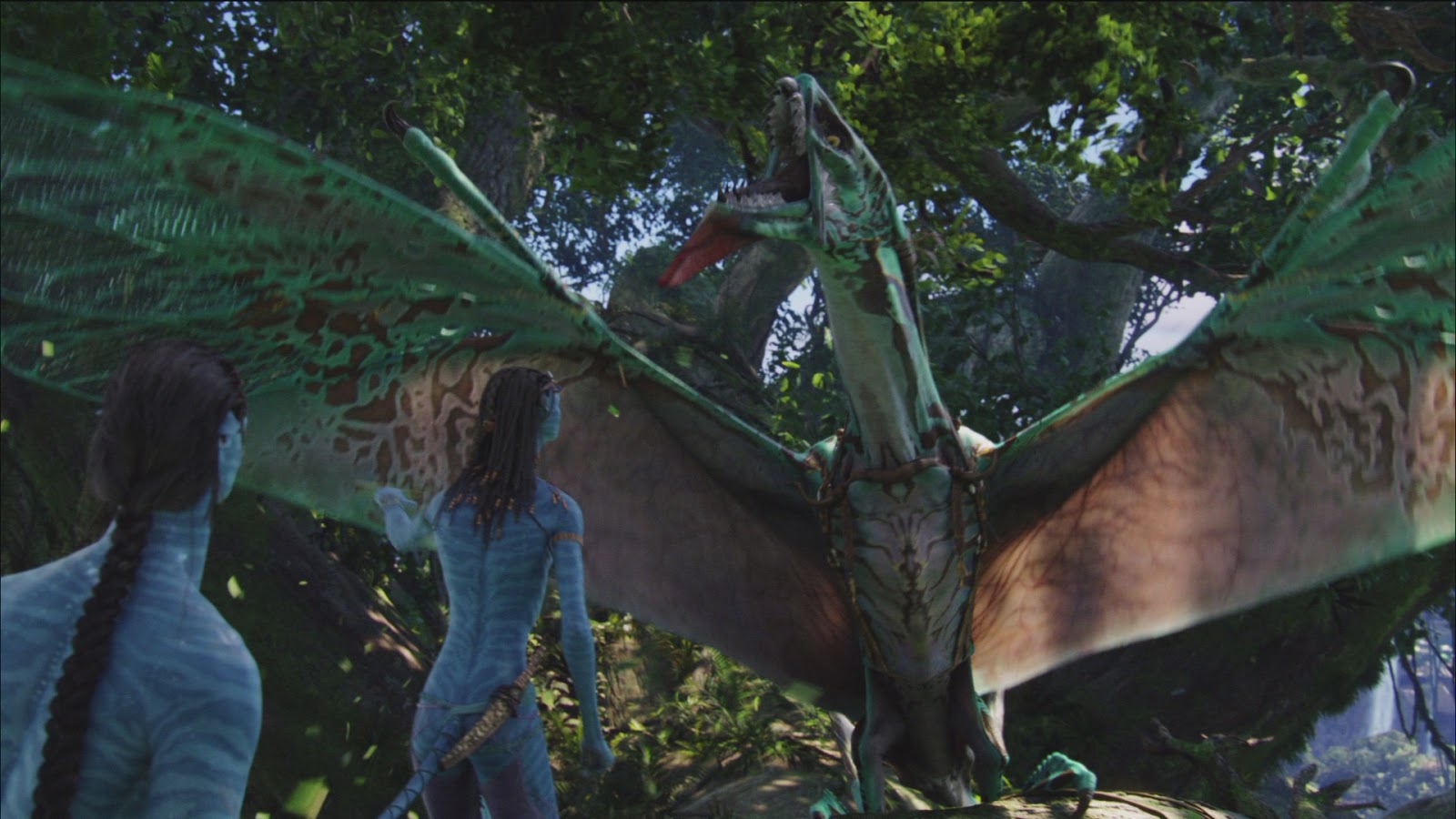
On the newest Animal Kingdom ride “Avatar Flight of Passage,” we are shown pictures of how the evil strip mining practices of man had almost destroyed the natural beauty of Pandora, but now enlightened scientists were working with the Na’vi to help restore the natural balance, as we snaked our way through probably two miles of concrete passageway made to resemble rock caves.  Once on the ride about 100 or so visitors are taken on a breath-taking banshee ride through the trees and oceans of Pandora.  I rode this at 11pm so I’m pretty sure it wasn’t solar powered.


I wonder, what lessons do my grandchildren take from these experiences?  It seems to me to be just modern indoctrination given by a corporation that appears not to follow its own advice.  But perhaps I am just jaded by today’s political polarization and the fact so many claim “the science is settled” when we attempt to debate the environment and the needs of mankind.
Related Posts Plugin for WordPress, Blogger...